
Have a low CGPA? Learn how you can study abroad, Study Abroad With Low CGPA Students Guide what universities consider, how to strengthen your application, and what to check before applying.
Study Abroad With a Low CGPA: What Are Your Options?
A low CGPA can make your study abroad search harder. It does not always close the door.
Universities set their own entry requirements. Some also use different requirements for different courses. Your degree, subject, English score, work experience, and other qualifications can also matter.
If you want to study abroad with a low CGPA, start with the course requirements. Do not rely on general lists that promise admission with a certain GPA.
What CGPA Do You Need to Study Abroad?
There is no single Study Abroad With Low CGPA requirement for studying abroad.
The required grade depends on your university, course, degree level, and previous qualification. Some universities also set different requirements based on the institution where you completed your degree.
For example, Cardiff University says it generally considers applicants from Pakistan with a CGPA around 3.0 or above for postgraduate courses that require a UK 2:1. For courses requiring a UK 2:2, it gives a general guideline of around 2.5 or above. The admissions tutor makes the final decision.
The University of Surrey also uses different thresholds. For some postgraduate courses requiring a UK 2:1, it lists a GPA of 2.6 or 2.8 out of 4.0 for Pakistani applicants. For courses requiring a UK 2:2, it lists 2.4 or 2.6, depending on the institution.
These examples show why you should check the exact course before applying.
Which Factors Can Strengthen a Low-CGPA Application?
Your CGPA forms part of your academic record. Other parts of your application can also matter when a university allows them.
Build Relevant Work Experience
Relevant work experience can support your application when the course considers professional experience.
For example, if you studied business and worked in marketing, explain what you learned through that role. Connect your experience to the master’s course you want to study.
Do not assume work experience will replace a minimum academic requirement. First check the course conditions.
Improve Your English Score
Universities often set English language requirements for international students.
A higher English language score can help you meet that requirement. However, it does not normally replace an academic entry requirement.
Check the university’s accepted tests and required score before booking an exam. Some universities may also offer approved language preparation routes.
Write a Clear Statement of Purpose.
Your statement of purpose should explain why you want toStudy Abroad With Low CGPA.
Talk about your previous education, relevant experience, skills, and future plans. If your grades improved later in your degree, you can mention that change.
Keep your explanation honest and brief. Do not make claims you cannot support.
Add Relevant Qualifications
A relevant course, professional qualification, research project, or additional academic Study Abroad With Low CGPA can strengthen your profile in some situations.
The qualification should connect to your proposed degree. An unrelated certificate may add little value.
Always check whether the university considers additional qualifications when assessing applicants.
Get Useful Recommendations
Some programs ask for academic or professional references.
Choose people who know your academic work or professional abilities. A useful reference should give specific information about your skills and experience.
Do not treat references as a way to hide a low Study Abroad With Low CGPA. They should support the rest of your application.
Which Countries Can You Consider With a Low Study Abroad With Low CGPA?
United Kingdom
The UK has many universities with different admission standards.
Some universities publish country-specific requirements for Pakistani qualifications. Cardiff and Surrey are two examples where published postgraduate requirements include Study Abroad With Low CGPA ranges below 3.0 for certain courses.
This does not mean every UK university or course will accept the same CGPA.
Check the specific program before you apply. Also check whether your bachelor’s degree meets the required level.
Australia
Australian universities set their own admission requirements for postgraduate study.
Requirements can include your previous degree, academic results, relevant subject background, English ability, and other course conditions.
A low CGPA therefore requires a course-by-course search. Do not assume that one Australian university’s policy applies to another.
Canada
Canadian universities and colleges also set their own academic requirements. Your first step should be finding a program where your academic background meets the published admission conditions.
Admission and immigration are separate steps. If you need a Canadian study permit, you generally need a letter of acceptance from a designated learning institution.
Check the institution and program before you pay an application fee.
Germany
Germany does not have one CGPA rule for every master’s program.
The German Academic Exchange Service, DAAD, explains that universities can set their own admission requirements. This is especially relevant for master’s programs. Universities may require specific qualifications or other evidence for admission.
You should therefore check the requirements of the exact German program you want to study.
How to Find Universities That Match Your Academic Profile
Start With the Official Website
Begin with the university’s official website.
Look for the international entry requirements and the page for your specific program. These pages provide more reliable information than general social media posts.
Check the Minimum Grade.
Write down the exact GPA or percentage the university asks for.
Then compare it with your transcript. If yourStudy Abroad With Low CGPA falls below the published minimum, contact the university before applying.
Check Your Degree
Your CGPA is only one part of your academic profile.
The university may require a bachelor’s degree in a particular subject. It may also require a specific degree length or qualification level.
For example, Cardiff states that its postgraduate taught courses consider recognised four-year bachelor’s degrees from Pakistan, along with certain master’s routes.
Review Course-Specific Requirements
Read the complete course page.
Check for required subjects, work experience, English scores, portfolios, tests, or other conditions.
A university may accept your CGPA but still reject an application if you do not meet another course requirement.
Contact Admissions When the Case Is Unclear
If your CGPA sits close to the required level, ask the admissions team for clarification.
Send your degree title, university, CGPA, graduation year, and intended course. Ask whether your qualification meets the academic requirement.
Written confirmation can help you avoid an unnecessary application fee.
How to Improve Your Study Abroad Profile Before Applying
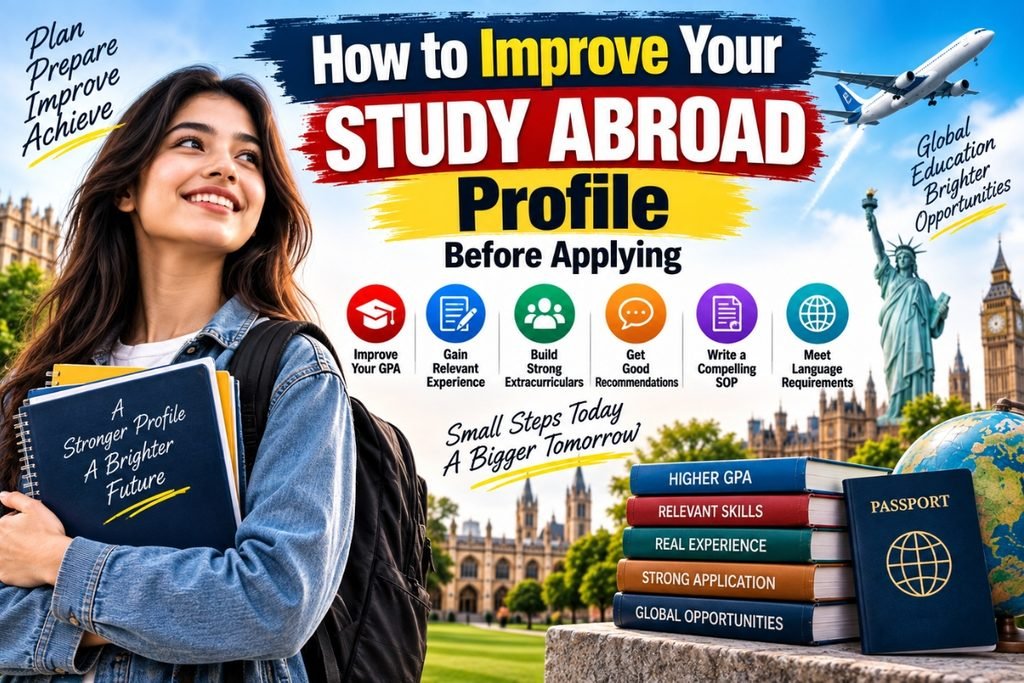
If you have time before applying, improve the parts of your profile that you can control.
You can gain relevant work experience, complete suitable qualifications, improve your English score, and build useful academic or professional projects.
You should also prepare a focused CV and statement of purpose.
Most importantly, create a realistic university list. Include courses where your academic profile meets the published requirements.
Common Mistakes Study Abroad With Low CGPA Should Avoid
Do not trust every “low CGPA university” list online.
Requirements can change. A university can also set different standards for different programs.
Avoid applying without checking your degree requirements. Do not assume IELTS can compensate for an academic shortfall.
You should also avoid false documents or misleading information. Your application should match your official academic records.
Finally, do not pay an agent simply because they promise admission. Verify important claims with the university itself.
What Should You Include in Your SOP With a Low Study Abroad With Low CGPA?
Your statement of purpose should focus on your academic and career direction.
Explain why you chose the course. Show how your previous education connects to it. Mention relevant work, projects, research, or other preparation.
If your CGPA needs explanation, keep it factual. Do not make the entire SOP about your grades.
Instead, show what you have done since then and why you are prepared for the proposed course.
FAQs
Can I apply if my CGPA is below the university’s minimum?
You can contact the university to ask about your eligibility. Do not assume that an exception exists unless the admissions team confirms it.
Does a higher IELTS score cancel out a low Study Abroad With Low CGPA?
Usually, these are separate requirements. A strong English score can help you meet the language condition, but you still need to satisfy the academic requirements of your course.
Can I apply for a pathway program?
Some universities offer pathway options when students do not meet direct entry requirements. For example, the University of Surrey offers a Pre-Master’s Preparation Programme for students who do not meet certain postgraduate entry requirements.
Can I apply to more than one university?
Yes. You can build a shortlist of programs with different entry requirements. Check each university individually and apply only where you have a reasonable academic match.
Does university admission guarantee a student visa?
No. Admission and immigration decisions are separate. For example, Canada requiresStudy Abroad With Low CGPA permit applicants to provide a letter of acceptance from a designated learning institution, along with other required documents.
Conclusion
A low CGPA can limit some Study Abroad With Low CGPA abroad choices. It does not automatically end your plans.
Your best approach is simple. Check official university requirements. Compare them with your degree and CGPA. Review every course condition before applying.
You can also strengthen your profile through relevant experience, additional qualifications, English preparation, and a clear statement of purpose.